
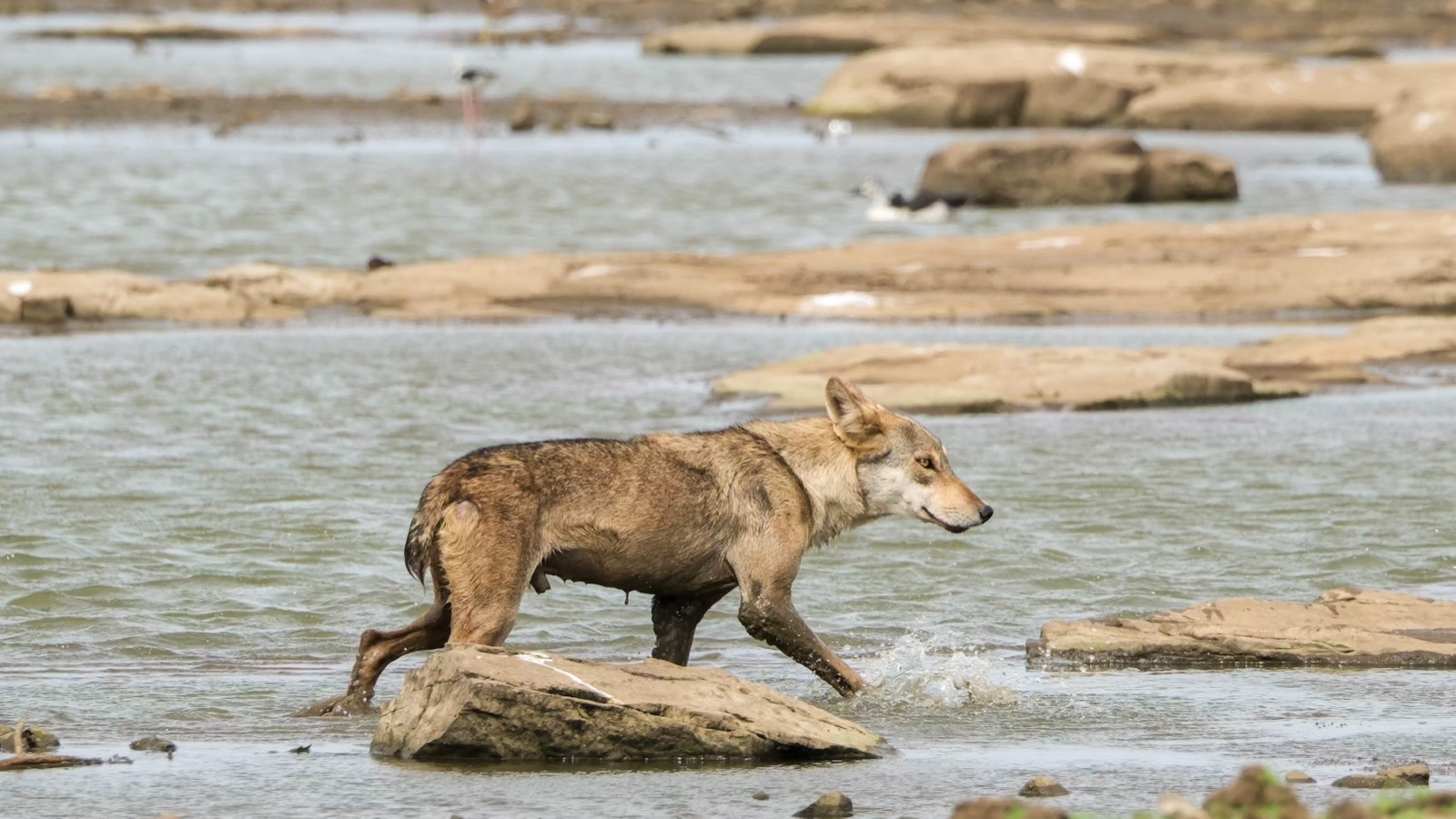
Alania before the wolf
Alania, also written as Alniya or Aalaniya in public sources, is not an empty waterbody on the edge of Kota. It is a living wetland system, an irrigation landscape, a winter waterbird gathering place, a breeding landscape for Sarus Crane, a feeding ground for waders, a refuge for fish, reptiles, mammals, insects, grasses, reeds, mud, and all the small lives that rarely get a dramatic headline.
The Key Biodiversity Areas profile lists Alniya Dam as a confirmed KBA of about 10.32147 sq km, with a freshwater and terrestrial system. It describes the site as an irrigation tank supporting agriculture through canals, and records historic winter waterbird numbers of 20,000 to 21,000 birds during a February 2002 survey. In normal water years, that same public profile notes that the wetland could hold even more waterfowl.
A 2026 avifaunal study from Alania wetland recorded 89 bird species between October 2023 and September 2024, including resident birds and seasonal migrants. Another study has treated Alniya Dam as important habitat for Black-winged Stilt. Even the public KBA threat summary is uncomfortable: agriculture, pesticides, encroachment, eutrophication, water over-use, cattle use, clay gathering, and human disturbance are not future possibilities. They are already part of the story.
And then there are the pressures many of us have seen with our own eyes: illegal fishing, soil and stone excavation, vehicles pushing too close, people walking into habitat edges, and visitors who behave as if a wild animal's personal space is only an obstacle between them and a sharper Instagram or Facebook post.
The eBird checklist for this field day is linked in the source trail. I am not reproducing the full checklist here, because the point of this report is not to turn Alania into a target list. The point is to ask whether we still know how to stand near a living wetland without trying to possess it.
The birds were already telling the story
Before the wolf entered the frame, Alania had already been speaking through birds.
A Ruddy Turnstone appeared like a rare inland surprise. An Asian Woolly-necked Stork stood with the heaviness of a threatened species. Greater Short-toed Larks, tiny travellers from far away, used this land to feed, breathe, gather strength, and prepare for the next distance. Tawny Larks held the dry open edge, reminding us that the wetland is not only water. It is also the surrounding ground.
Ruddy Turnstone
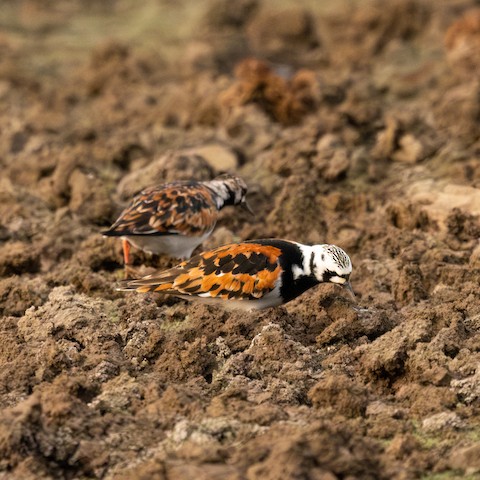 Rare sighting
Asian Woolly-necked Stork
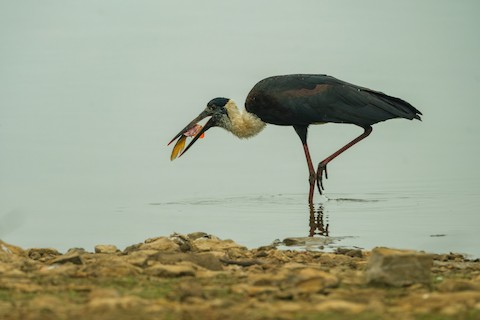 Threatened presence
Greater Short-toed Lark
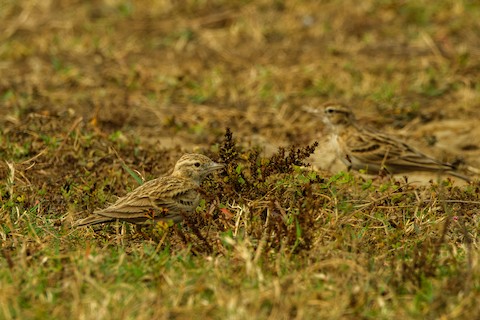 Long-distance migrant
Tawny Lark
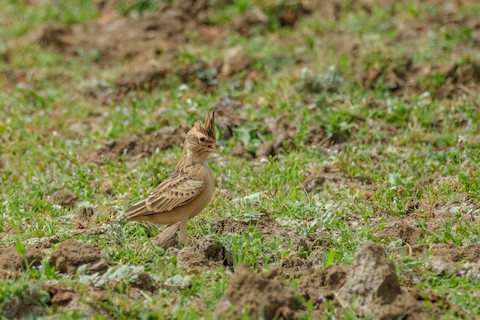 Open-country bird
A Sarus Crane family moved through the wetland with the quiet authority of one of India's living natural symbols. Black-tailed Godwits were busy feeding after long journeys. Whiskered Terns bathed and preened. Little Stints gathered as a small, nervous pulse over the mud. Little Ringed Plovers worked the same exposed wetland edge in their quieter way.
Sarus Crane
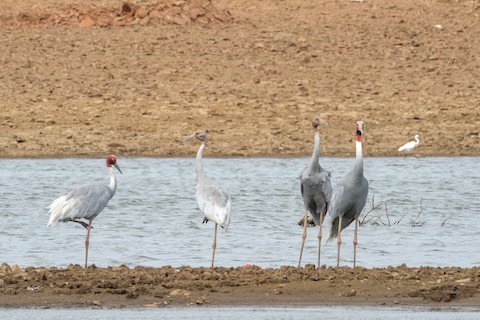 Family at Alania
Black-tailed Godwit
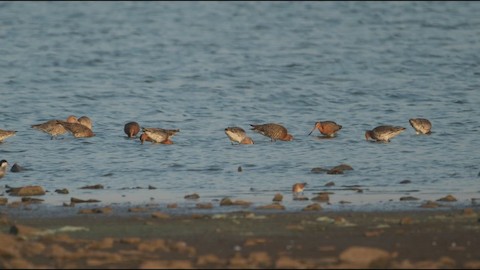 Feeding migrant
Whiskered Tern
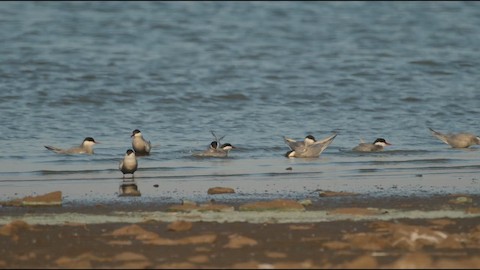 Bathing and preening
Little Stint
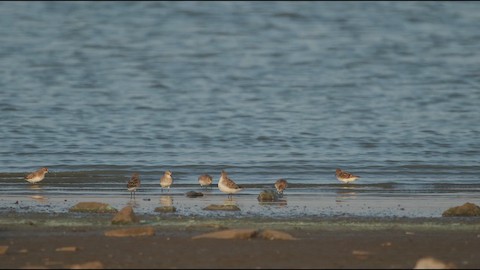 Flock on the mud
Little Ringed Plover
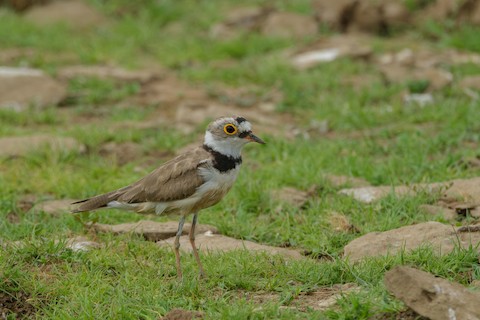 Mud-edge life
Pallas's Gulls and Caspian Gulls arrived as winter visitors. Ruffs stitched their own passage story into the same waterline. Each one is part of a wider map of movement, weather, hunger, and survival.
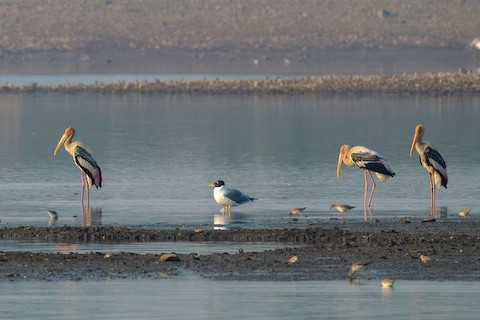
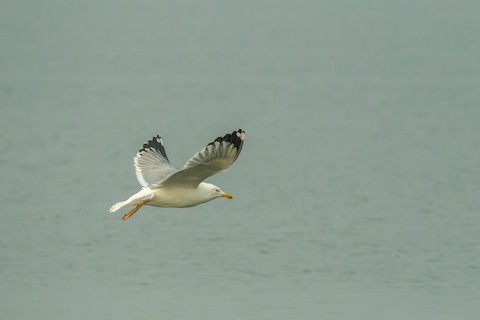
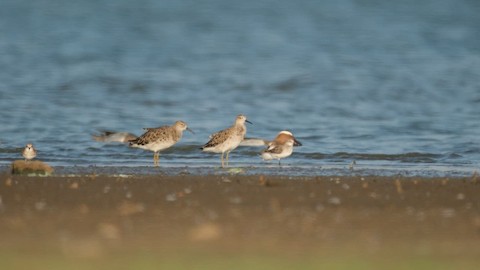
There was also breeding life: an Indian Courser chick on the ground, and Small Pratincoles raising chicks in Alania. These are not decorative birds for our feeds. They are lives with hunger, exhaustion, fear, parenting, rest, and boundaries. Every time we walk too close, drive too close, shout too close, or photograph too close, we are not only disturbing a bird. We are disturbing a life-history event that took thousands of years to learn this landscape.
Indian Courser
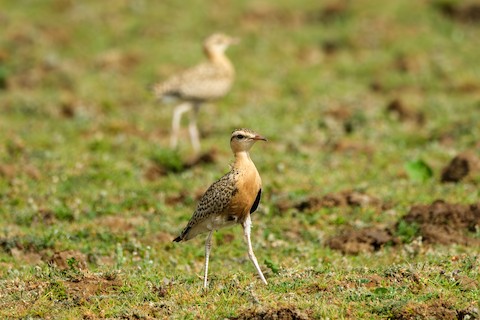 Breeding ground
Small Pratincole
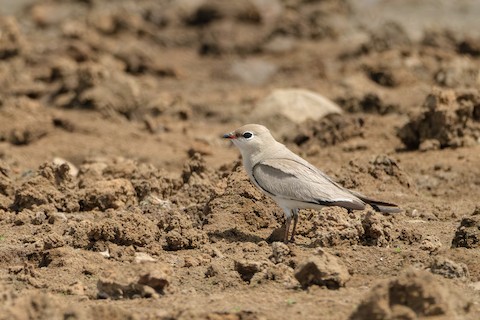 Breeding life
Small Pratincole raising chicks in Alania
The first sighting
30 May 2026 was a very special day for me.
That day, I saw a lone Indian grey wolf for the first time in my life.
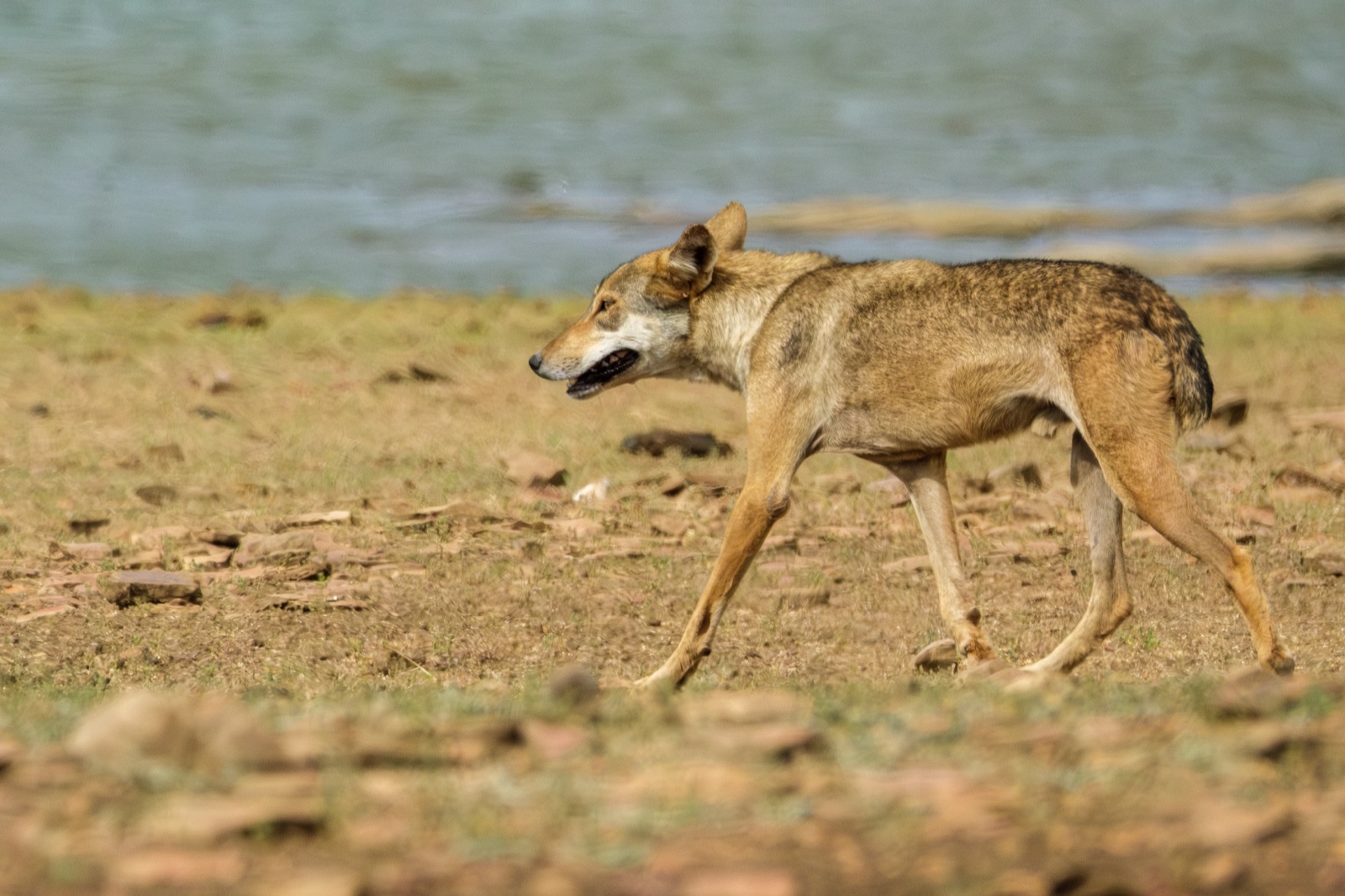
For a few seconds I was not standing in the harsh summer landscape of Rajasthan anymore. I was back in my childhood. Back in front of Doordarshan. Back to Sunday mornings. Back to The Jungle Book.
I think I was 8 or 9 years old when The Jungle Book used to air at 10 AM every Sunday. Like many children of that generation, I watched it with complete awe. In my child mind, Mowgli was not just a cartoon character. I believed he was real. The jungle was real. The wolf pack was real. And the love between Mowgli and his wolf mother was real.
More than Mowgli, it was Raksha who stayed with me.
Raksha, the wolf mother. The one who protected the man-cub. The one who accepted a human child as her own. The one who showed that love, protection, and motherhood are not human inventions.
That idea shaped something deep inside me. Maybe it shaped my entire thought process.
And I owe a lot of that to those few Doordarshan shows that quietly shaped an entire generation: The Jungle Book, Turning Point, Surabhi, Potli Baba Ki, Tarram Too, and the stories of my favourite human being, Tabassum.
These were not just television shows. They were windows. They gave us imagination, curiosity, scientific temperament, and respect for the wild world. They made us feel that nature was not background scenery, but something alive, intelligent, ancient, and sacred in its own way.
And after all these years, when I saw that lone wolf in the heat of Alania, Raksha returned.
Not as nostalgia. As a question.
It is not always humans who protect wildlife
We often like to believe that we are the saviours of nature.
We make speeches. We plant ceremonial trees. We celebrate World Environment Day. We post green graphics. We write slogans. We call ourselves conservationists, environmentalists, birders, wildlife lovers, nature lovers.
But the truth is far more uncomfortable.
It is not always humans who protect wildlife. Most of the time, whether we understand it or not, it is nature and the wild that are protecting us.
The forests that hold climate together. The oceans and coral reefs that support life in ways we barely understand. The phytoplankton that helped shape the atmosphere of this planet. The elephants that open pathways and shape forests. The rivers that gave birth to civilizations. The grasslands that hold life even when we foolishly call them wastelands. The wetlands that hold water, silt, fish, birds, memory, and relief in a heating world.
There are countless examples of the mercy of the wild.
And yet, with full arrogance, we call animals bezubaan jaanwar.
No. They are not voiceless. We are the ones who have become deaf.
The problem is that we refuse to listen
Animals are not silent.
The wolf speaks through his absence from landscapes where he once belonged. The river speaks when it runs dry. The forest speaks when it burns. The grassland speaks when it is turned into real estate, mining blocks, or solar parks without ecological thought. The birds speak when their timing changes. The insects speak when they disappear. The night speaks when even darkness brings no relief from heat.
Everything is speaking.
But we are busy scrolling. Busy consuming. Busy pretending. Busy celebrating.
We call animals bezubaan because their language does not serve our convenience. If we understood them, we would have to change. And change is exactly what our greedy species avoids.
We misuse science, technology, law, politics, religion, and every other tool available to us for our own benefit, while ignoring the habitat, ecosystem, soil, water, air, and living world that made our own evolution possible.
We behave like owners of this planet. But we are not owners.
We are recent tenants with a terrible maintenance record.
The joy did not last long
The sighting of this Indian grey wolf was a moment of pure joy for me.
But honestly, that joy did not last very long.
A wolf is not just an animal of the wild. A wolf is family. A wolf is pack. A wolf is belonging.
Yes, a lone wolf can simply be a naturally dispersing animal. Young wolves move. Animals travel. Survival has its own patterns, and not every lonely-looking field moment should be forced into tragedy.
But in today's broken landscape, a lone wolf also raises painful questions.
Why was he alone? Where was his pack? Where was his family? Did we already snatch away too much of his natural habitat? Did our roads, farms, mining, fences, settlements, garbage, free-ranging dogs, politics, and development dreams tear apart a world that was never ours to destroy?
I do not want to romanticise every wild sighting into sorrow. That would also be dishonest.
But I cannot ignore the condition of the world around him.
It was the end of May. The landscape was burning. A wild animal, one of the ancient citizens of this land, was using a stressed wetland for relief.
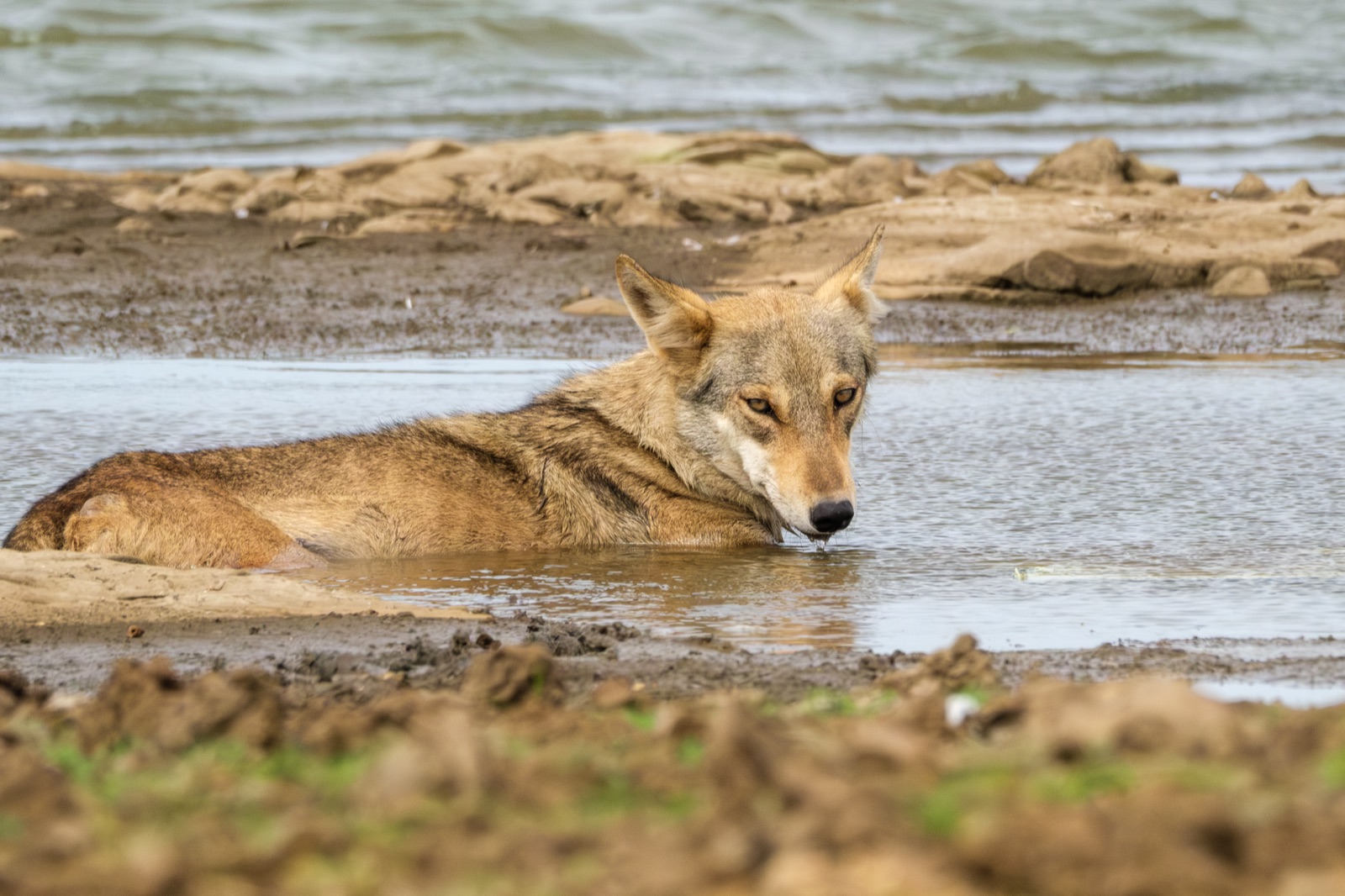
And we still discuss heatwaves as if they are only weather events.
They are not. They are warnings.
This heat is a warning. The shrinking water is a warning. The excavation scars are warnings. The illegal nets are warnings. The vehicles too close to waterbirds are warnings. The vanishing quiet is a warning.
The landscape is speaking. The wolf is speaking. The wetland is speaking.
We are just refusing to listen.
Raksha protected the man-cub. Are we protecting Raksha?
Mowgli's wolf mother was named Raksha.
Raksha means protection.
She protected the man-cub.
But are we returning the favour to her? Are we protecting Raksha? Or have we completely forgotten where we come from?
Are we so blinded by greed that we can no longer see what we are leaving behind for future generations?
An unlivable scorched earth. Polluted water. Poisoned air. Heat-trapped cities. Dead rivers. Fragmented forests. Excavated hills. Disturbed wetlands. Children who may know wild animals only through screens, logos, and textbook drawings.
This is not a future problem. This is already happening.
And still, every year, World Environment Day arrives like a scheduled social media festival.
People post green graphics. Brands post campaigns. Governments post slogans. Celebrities plant saplings for cameras. Everyone discovers nature for one day.
Then the next day, ancient forests are cleared, rivers are polluted, wetlands are filled, grasslands are called barren, hills are blasted, and wildlife corridors are cut into pieces.
The performance continues. The destruction continues.
One tree cannot compensate for an ancient ecosystem
Planting a tree is not wrong.
But using tree plantation as moral cover for destroying ancient ecosystems is deeply wrong.
What is the meaning of planting one tree in the name of mother while staying silent about forests being cut in Hasdeo, Nicobar, the Aravallis, and so many other landscapes?
What is the meaning of saying Ek Ped Maa Ke Naam when entire living forests, mothers to countless species, are treated as obstacles to mining, infrastructure, and political ambition?
A sapling is not a forest. A plantation is not an ecosystem. A slogan is not conservation. A photo-op is not climate action.
A tree guard on a roadside does not replace an ancient forest, a grassland, a wetland, a river, a ravine, or a wildlife corridor.
We cannot keep destroying complex living systems and then console ourselves with symbolic gestures.
That is not environmental responsibility. That is theatre.
And the wild is paying the price for our theatre.
The wetland is not a stage
Alania is under pressure from many directions at once.
Some pressures come through livelihood and water demand, and those need serious, fair, community-aware solutions. But some pressures come from pure carelessness: illegal fishing that treats a wetland like loot, soil and stone excavation that wounds the edge, habitat disturbance that pushes birds from feeding and nesting space, and photographers who keep moving closer because one more step might bring one more like.
That last part hurts because it comes from people who claim to love wildlife.
A photograph can document, educate, and move people. But a photograph taken by invading an animal's personal space is not conservation. It is extraction with a nice caption.
Birders, twitchers, and photographers need to say this honestly within our own circles: if our presence changes the animal's behaviour, if it forces a bird to leave a feeding patch, if it makes a nesting pair anxious, if it blocks a wolf's path to water, if it turns a quiet wetland into a chase, then we are not observers. We are the disturbance.
The first ethic of field observation should be distance.
The second should be silence.
The third should be the humility to leave without the shot.
Who is the real janwar here?
We buy water in plastic bottles and throw the bottle into the same world that gave us rivers.
We eat from plastic packets and throw the wrapper into the same soil that grows our food.
We pollute the air for endless energy demand and then buy air purifiers.
We dump garbage into rivers we call mother and goddess.
We worship nature in slogans and destroy it in policy.
Then we call ourselves the most intelligent species.
What intelligence is this?
Who is the real janwar here? The wolf trying to survive in his ancestral land? Or us?
Life on this planet has survived ice ages, asteroid impacts, volcanoes, earthquakes, tsunamis, and mass extinctions. The Earth is not begging us to save it.
Let us be very clear. The Earth will survive us.
It is humans who need saving from their own arrogance.
The Indian grey wolf belongs here. We are the disturbance.
The Indian grey wolf is not a visitor here. He is not an outsider. He is not a symbol placed here for our poetry, photography, or social media engagement.
He is one of the original citizens of this land.
His ancestors have walked these drylands, scrublands, grasslands, ravines, forest edges, and waterbody margins long before our roads, mines, cities, borders, speeches, and hollow environmental slogans.
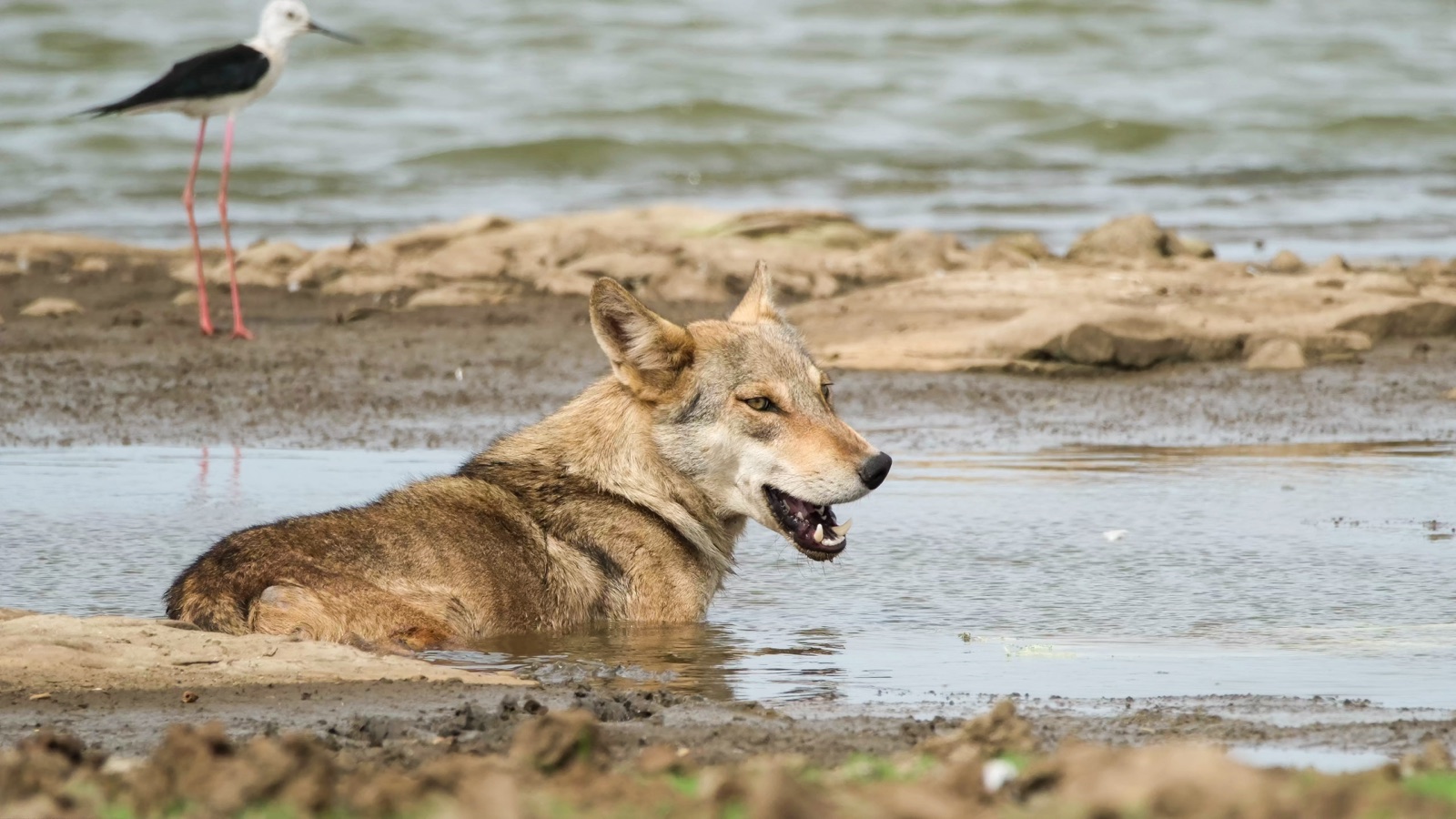
We are the disturbance here. Not him.
And yet it is always wildlife that is asked to adjust.
Move away from farms. Move away from roads. Move away from cities. Move away from mines. Move away from power lines. Move away from villages. Move away from development.
But where should they go?
How much more should the wild shrink so that our greed can expand?
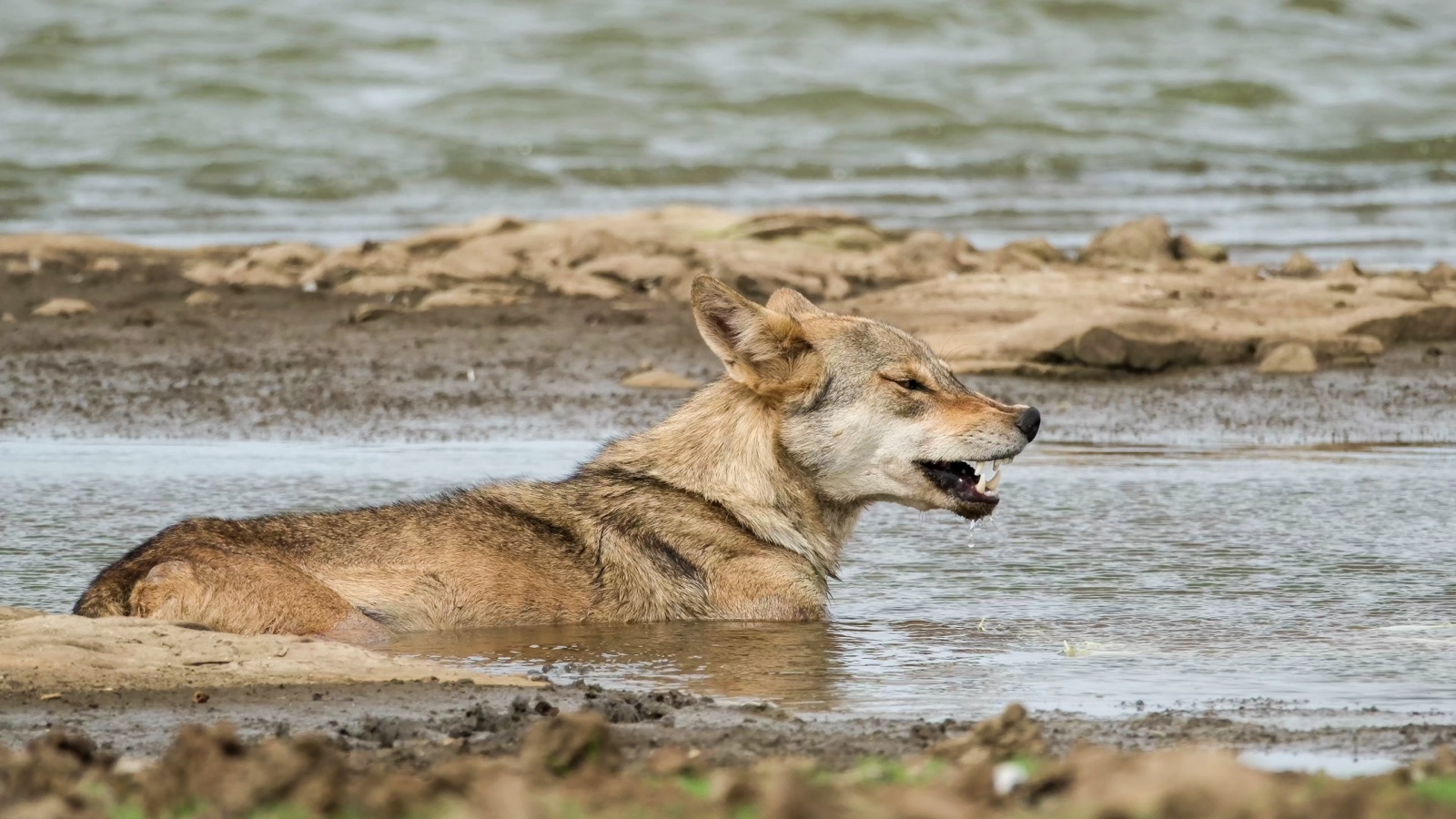
I do not feel like celebrating
On this World Environment Day, I do not feel like celebrating.
I feel ashamed.
I put my head down with shame because I am part of a species that was given everything for free: clean air, clean water, forests, rivers, soil, rain, birdsong, shade, food, life. And still we chose greed.
We were given a living planet. We are turning it into a marketplace, a dumping ground, and a furnace.
So please, do not call them bezubaan jaanwar.
They are not voiceless. They are not dumb. They are not lesser.
They are speaking through absence, hunger, thirst, shrinking habitat, silence, and disappearance.
It is we who have forgotten how to listen.
That lone wolf brought Raksha back to me. And Raksha still asks the same question:
She protected the man-cub.
Will the man-cub ever learn to protect her?
Or will he destroy everything and still call himself intelligent?
On this World Environment Day, I have no right to celebrate. Not until we learn humility. Not until we stop pretending. Not until we understand that saving nature is not charity.
It is self-defence.
And perhaps, after all these years, the wolf mother is still protecting us.
But this time, maybe she is protecting us by reminding us of our shame.