
This is a short summary. The full note, with its photo plates, timings and references, is under review at Indian BIRDS. Journals ask for work that has not been published before, so I am keeping the full text and the plates back until the editors decide. The pictures on this page are other frames from the same videos.
The film: Season: Out of Tune
These sap observations are one chapter of Season: Out of Tune, a film I shot and narrated over the same summer. It follows one hot season on the fringes of Mukundara: Indian grey wolves cooling off in a shrinking wetland, Bengal monitors wrestling, Sarus Cranes dancing, a chinkara looking for water, and the pitta pair raising chicks through the heatwave while waiting for the monsoon. The Arjuna and Indian ash sap come in around the eight-minute mark.
Where it was filmed. The film was not shot inside the tiger reserve's forest. It was shot on the fringes, among the villages, farmland, waterbodies and grasslands that sit around Mukundara Hills Tiger Reserve in Kota district. These are working lands, shared by farmers, herders and wildlife. When I say "Mukundara" here I mean that wider landscape, not the reserve.
Watch the film, with its chapters.
A summer out of tune
It was hard to spend that summer in the field and not think about the heat. By late May the heat was relentless. Kota touched 46.4 °C on 28 May, the hottest May day there in eight years, and the wetlands were shrinking by the week. A lone wolf was resting in the shallow water at Alania. Then a western disturbance broke the heat on 29 May, and the Arjuna went quiet.
I can't say the heat caused anything I saw at the sap. One summer of notes can't show that. What I can say is that this summer was hotter and longer than the seasons allow, and that the wildlife and the people living on these fringes had to get through it with whatever they had. That, more than any single observation, is what the film is about.
Daily values in a table
| Date | Max °C | Min °C | Humidity % | Rain mm |
|---|---|---|---|---|
| 1 May | 41.3 | 27.4 | 29 | 0.0 |
| 2 May | 39.5 | 27.4 | 34 | 0.1 |
| 3 May | 40.4 | 24.9 | 36 | 0.0 |
| 4 May | 36.0 | 24.5 | 40 | 0.6 |
| 5 May | 36.6 | 22.2 | 48 | 2.3 |
| 6 May | 37.3 | 23.7 | 39 | 0.0 |
| 7 May | 39.9 | 25.2 | 29 | 0.0 |
| 8 May | 40.9 | 26.3 | 27 | 0.0 |
| 9 May | 39.9 | 25.4 | 30 | 0.0 |
| 10 May | 40.8 | 26.0 | 33 | 0.0 |
| 11 May | 41.8 | 28.8 | 29 | 0.0 |
| 12 May | 42.3 | 28.5 | 23 | 0.0 |
| 13 May | 42.9 | 30.5 | 21 | 0.0 |
| 14 May | 42.8 | 29.8 | 23 | 0.0 |
| 15 May | 41.3 | 28.5 | 28 | 0.0 |
| 16 May | 41.6 | 30.0 | 23 | 0.0 |
| 17 May | 42.5 | 30.3 | 23 | 0.0 |
| 18 May | 44.0 | 32.3 | 20 | 0.0 |
| 19 May | 43.5 | 31.8 | 19 | 0.0 |
| 20 May | 42.2 | 31.9 | 19 | 0.0 |
| 21 May | 41.1 | 32.0 | 17 | 0.0 |
| 22 May | 41.6 | 30.6 | 18 | 0.0 |
| 23 May | 42.0 | 31.6 | 21 | 0.0 |
| 24 May | 43.0 | 32.6 | 22 | 0.0 |
| 25 May | 43.1 | 31.9 | 25 | 0.0 |
| 26 May | 43.3 | 31.8 | 26 | 0.0 |
| 27 May | 43.3 | 32.2 | 25 | 0.0 |
| 28 May | 44.4 | 32.5 | 27 | 0.0 |
| 29 May | 41.7 | 23.3 | 38 | 0.7 |
| 30 May | 37.8 | 24.6 | 49 | 0.3 |
| 31 May | 36.8 | 25.8 | 50 | 1.2 |
| 1 Jun | 37.1 | 24.3 | 64 | 4.8 |
| 2 Jun | 35.6 | 23.9 | 57 | 0.3 |
| 3 Jun | 38.7 | 28.4 | 46 | 0.4 |
| 4 Jun | 39.7 | 26.3 | 47 | 0.6 |
| 5 Jun | 36.4 | 22.6 | 58 | 1.5 |
| 6 Jun | 39.1 | 27.7 | 47 | 0.2 |
| 7 Jun | 39.3 | 28.3 | 48 | 0.0 |
| 8 Jun | 40.0 | 30.4 | 45 | 0.0 |
| 9 Jun | 41.2 | 30.4 | 42 | 0.0 |
| 10 Jun | 40.5 | 29.1 | 46 | 0.0 |
| 11 Jun | 39.5 | 29.9 | 48 | 0.0 |
| 12 Jun | 39.2 | 28.1 | 50 | 0.6 |
| 13 Jun | 37.2 | 24.0 | 63 | 5.5 |
| 14 Jun | 37.9 | 27.5 | 58 | 1.8 |
| 15 Jun | 37.3 | 27.7 | 49 | 0.0 |
| 16 Jun | 37.9 | 28.7 | 50 | 0.2 |
| 17 Jun | 37.6 | 28.7 | 46 | 0.0 |
| 18 Jun | 36.0 | 28.5 | 52 | 0.0 |
| 19 Jun | 35.1 | 26.4 | 65 | 4.6 |
| 20 Jun | 35.1 | 25.5 | 62 | 1.7 |
| 21 Jun | 35.3 | 25.5 | 60 | 2.2 |
| 22 Jun | 36.3 | 28.5 | 51 | 0.8 |
| 23 Jun | 36.8 | 28.8 | 50 | 2.3 |
| 24 Jun | 36.6 | 28.3 | 54 | 1.4 |
| 25 Jun | 36.4 | 27.3 | 62 | 1.9 |
| 26 Jun | 37.1 | 26.6 | 63 | 2.6 |
| 27 Jun | 38.6 | 28.8 | 57 | 1.0 |
| 28 Jun | 39.1 | 26.2 | 59 | 2.6 |
| 29 Jun | 37.0 | 25.9 | 65 | 6.0 |
| 30 Jun | 36.8 | 24.7 | 58 | 1.6 |
| 1 Jul | 34.3 | 28.4 | 65 | 0.7 |
| 2 Jul | 33.9 | 26.4 | 74 | 5.0 |
| 3 Jul | 32.2 | 25.7 | 77 | 3.1 |
| 4 Jul | 33.7 | 25.5 | 75 | 4.4 |
| 5 Jul | 35.3 | 27.5 | 74 | 6.5 |
| 6 Jul | 34.8 | 27.2 | 79 | 5.6 |
| 7 Jul | 35.4 | 27.1 | 80 | 7.1 |
| 8 Jul | 34.2 | 25.6 | 79 | 8.7 |
| 9 Jul | 35.1 | 26.3 | 72 | 12.0 |
| 10 Jul | 35.3 | 28.2 | 61 | 0.0 |
| 11 Jul | 35.1 | 26.9 | 58 | 0.0 |
| 12 Jul | 34.8 | 27.3 | 60 | 0.0 |
| 13 Jul | 35.4 | 27.8 | 60 | 0.0 |
| 14 Jul | 34.8 | 27.5 | 57 | 0.1 |
| 15 Jul | 34.6 | 28.0 | 56 | 0.1 |
What I watched
The trees are one Arjuna (Terminalia arjuna) and two Indian ash (Lannea coromandelica), all within about a kilometre and a half of each other in the dry deciduous forest of the Mukundara Hills landscape. Nobody had cut the bark to make them bleed. The sap was coming out on its own.
I watched everything from my car, parked on a village trail that local bikes, cars and tractors use every day, 20 to 50 metres from the trees. I used binoculars and a 600 mm lens and never got out. Each visit is logged as an eBird checklist.
Birds at the Arjuna
Between 12 and 29 May the Arjuna had one small opening, about the width of a thumb, and a steady line of visitors fed at it: Brown-capped Pygmy Woodpecker, Black-rumped Flameback, Cinereous Tit, Indian White-eye, Common Tailorbird and a palm squirrel. From where I sat I could not tell whether the small insect-eaters were taking the sap itself or tiny insects drawn to it, so I only say they fed at the opening.
On 12 May a pygmy woodpecker sat next to the wound for a long time without feeding. A flameback came, pecked it open and fed, and once it left the pygmy went straight in. Maybe the bigger bird made the sap reachable. I can't say more than that from one morning.
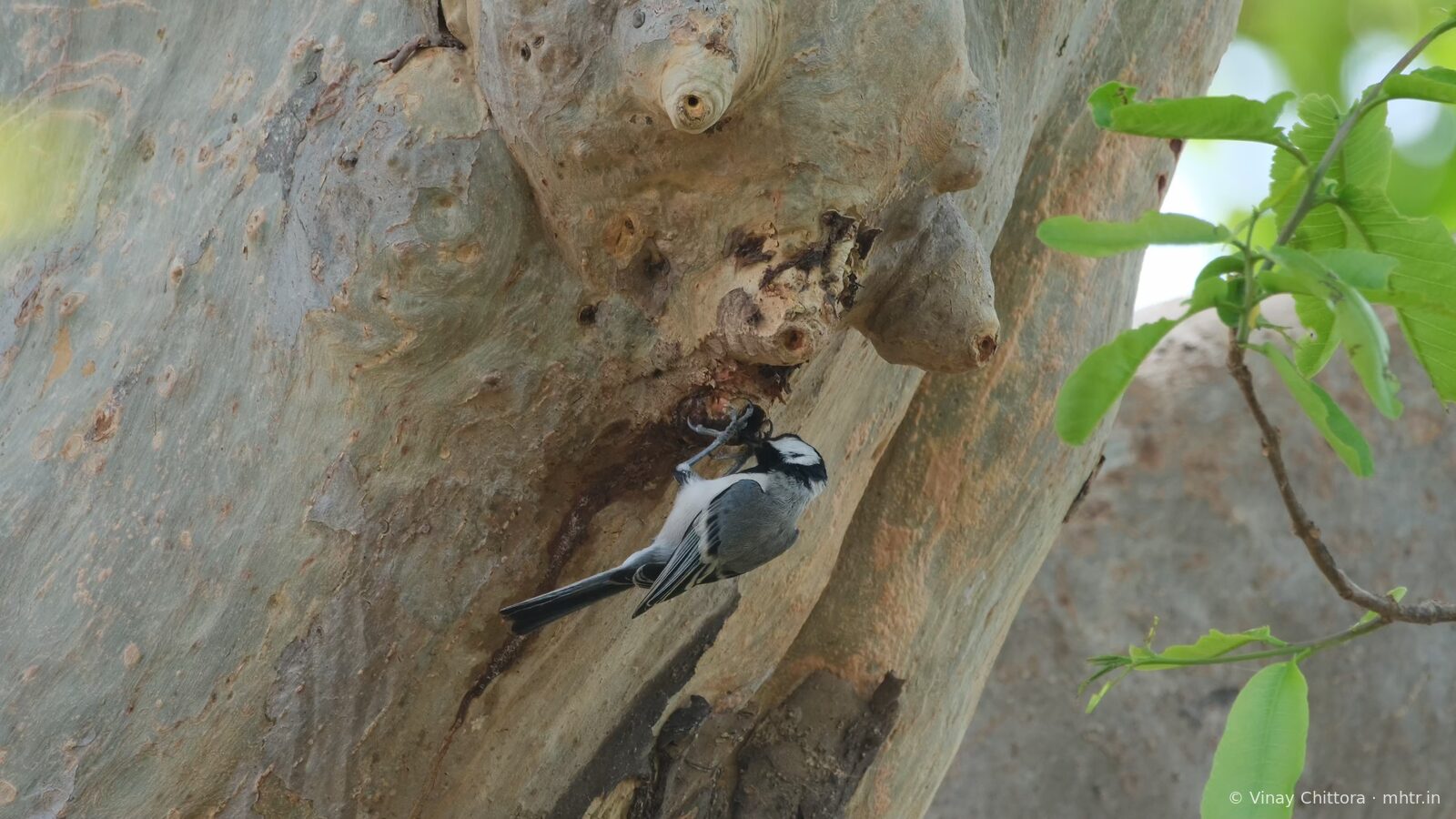
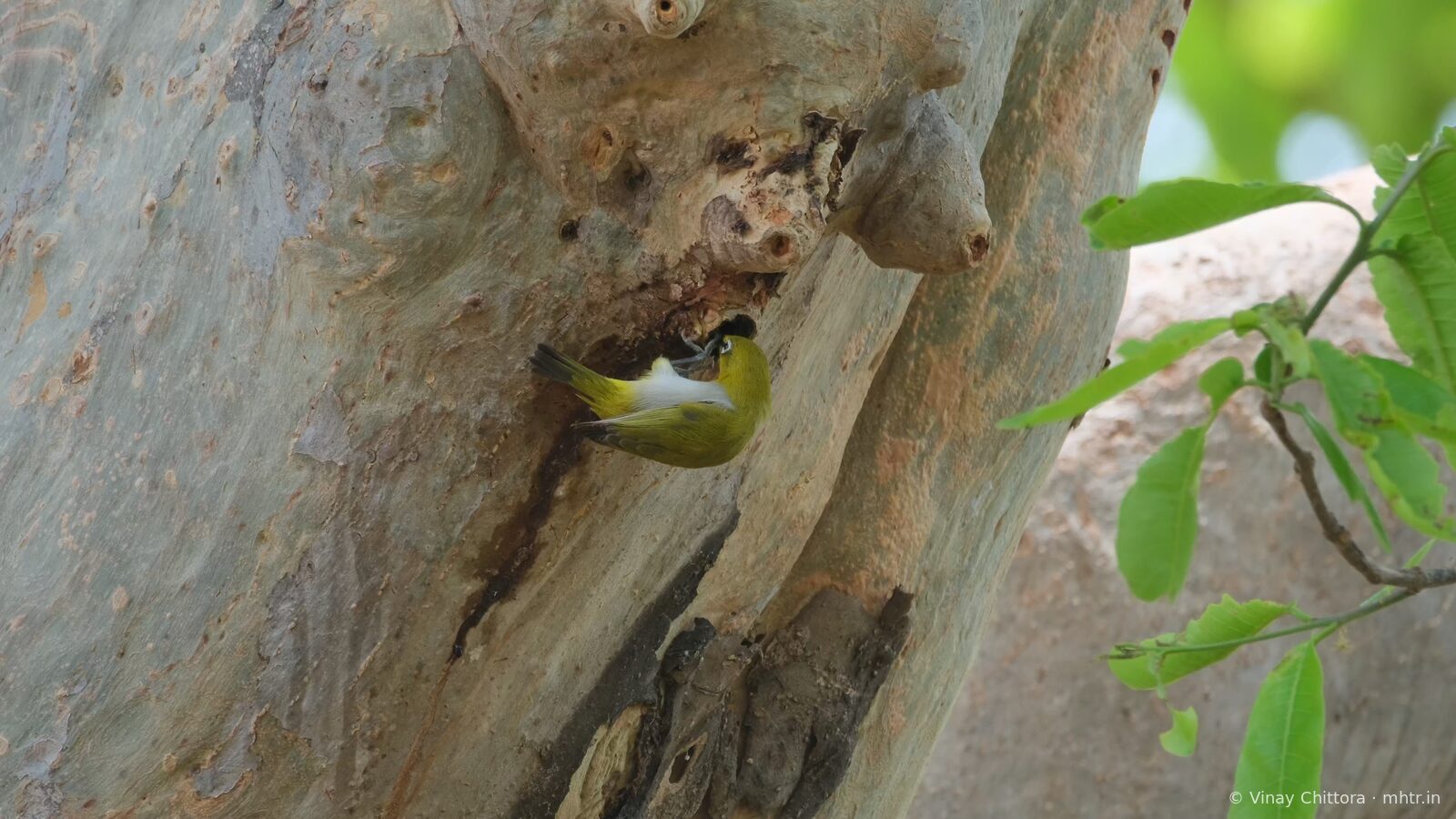
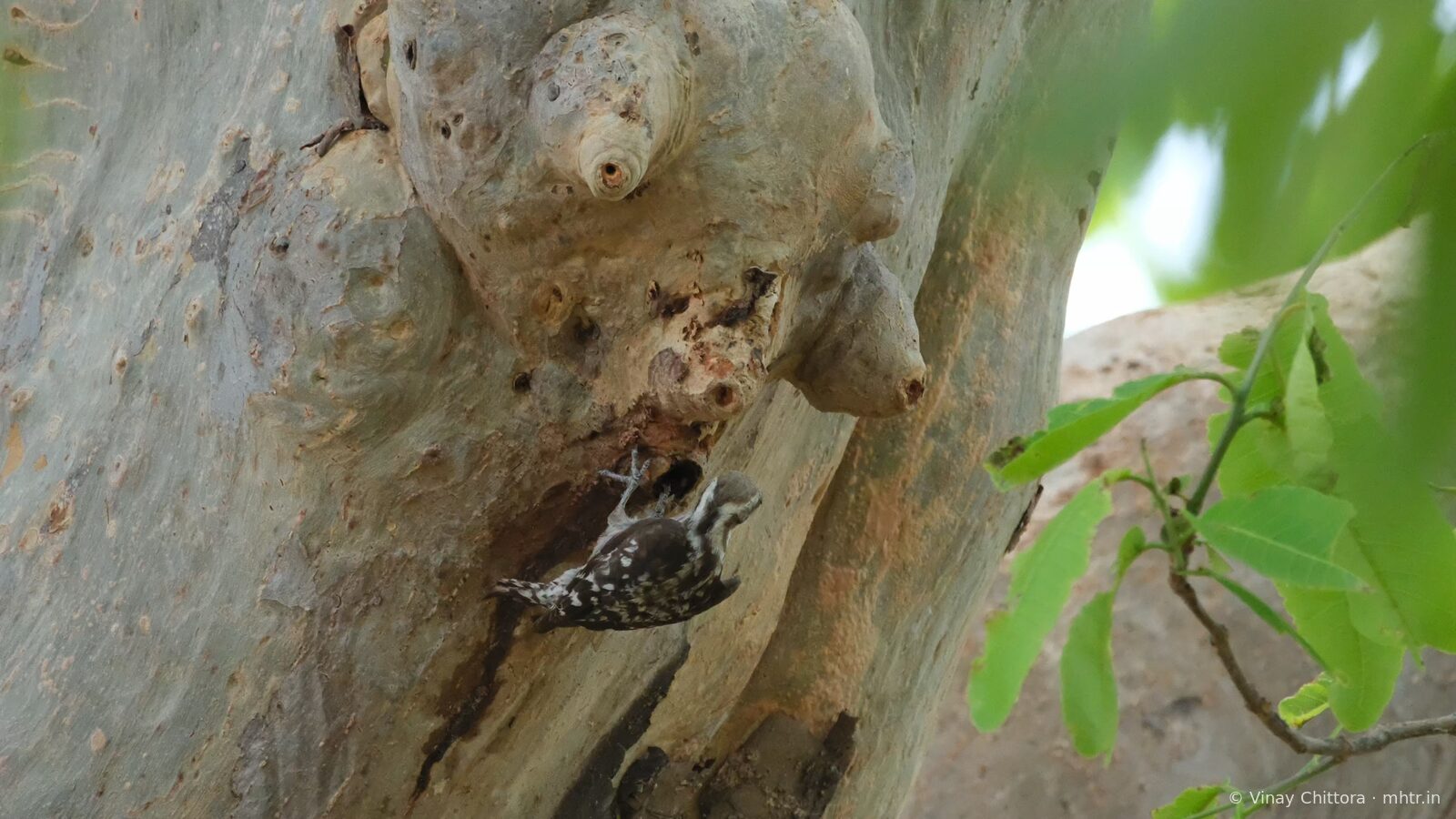
The last feeding I saw was on 29 May, the day the heatwave broke. I passed the tree on eighteen more visits through June and never saw anything there again.
Langurs and pittas at the Indian ash
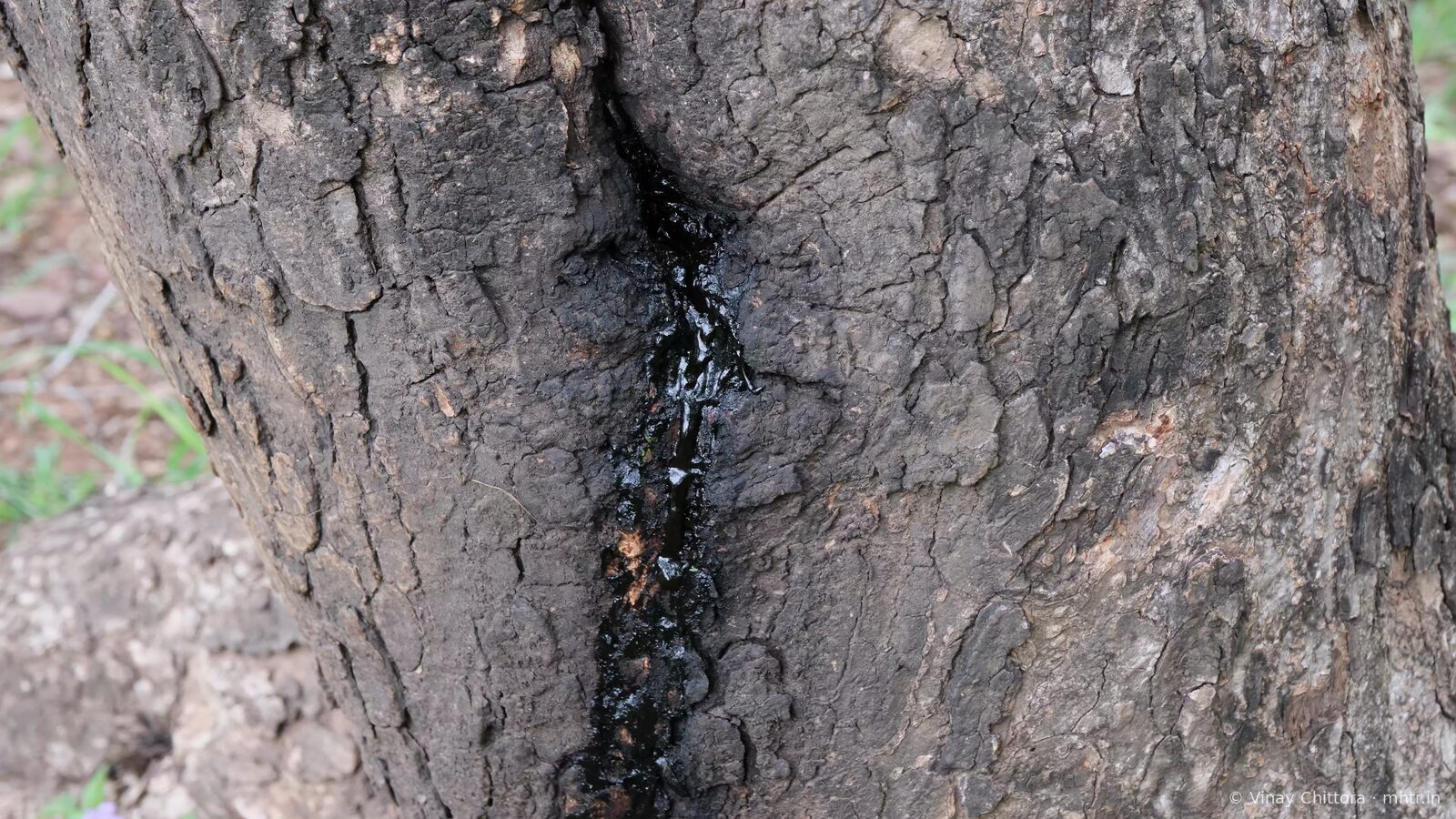
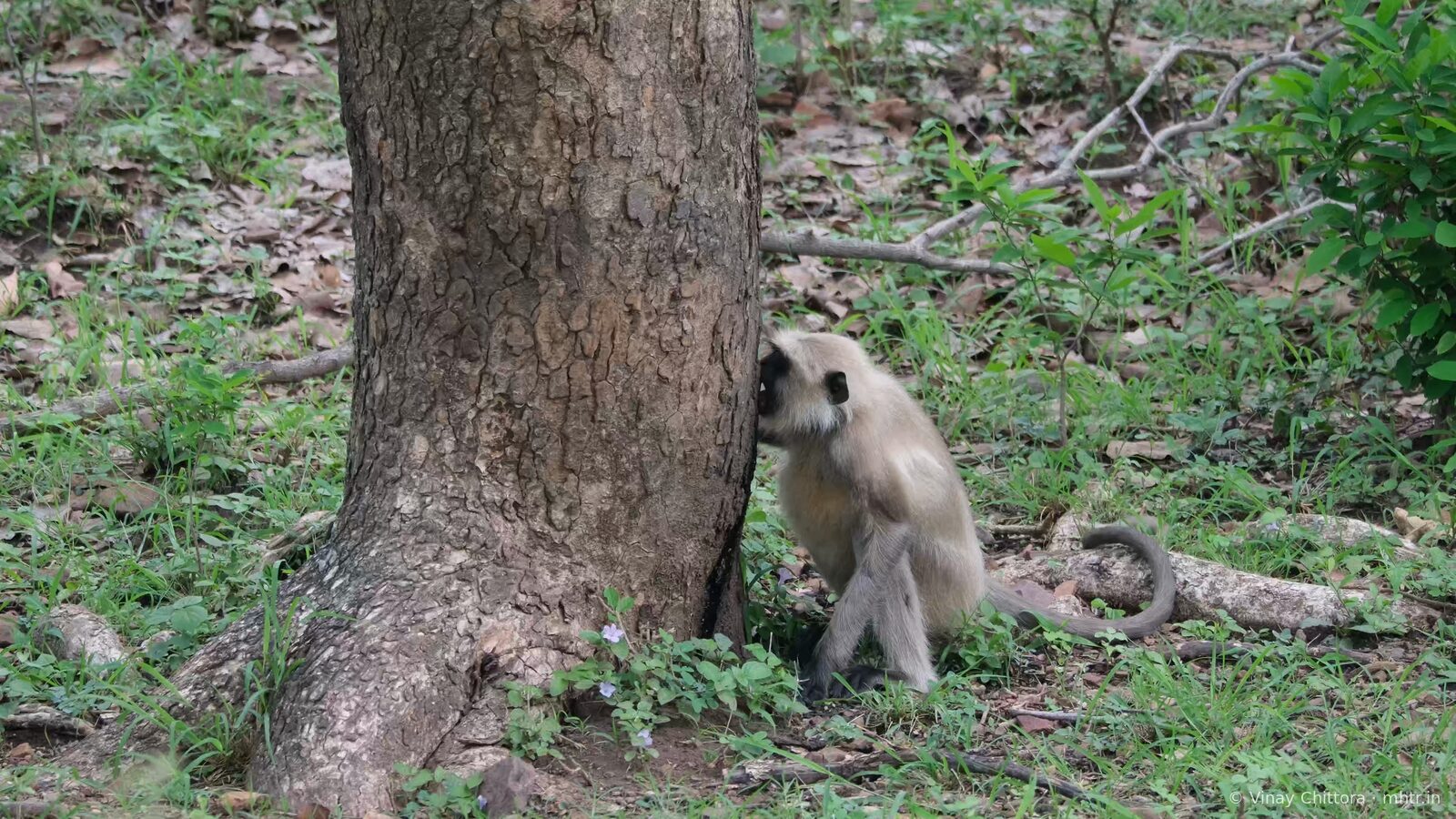
At the two Indian ash trees, langurs fed on the sap, which is golden-brown when fresh and nearly black when it dries. One picked a lump off the trunk and ate it.
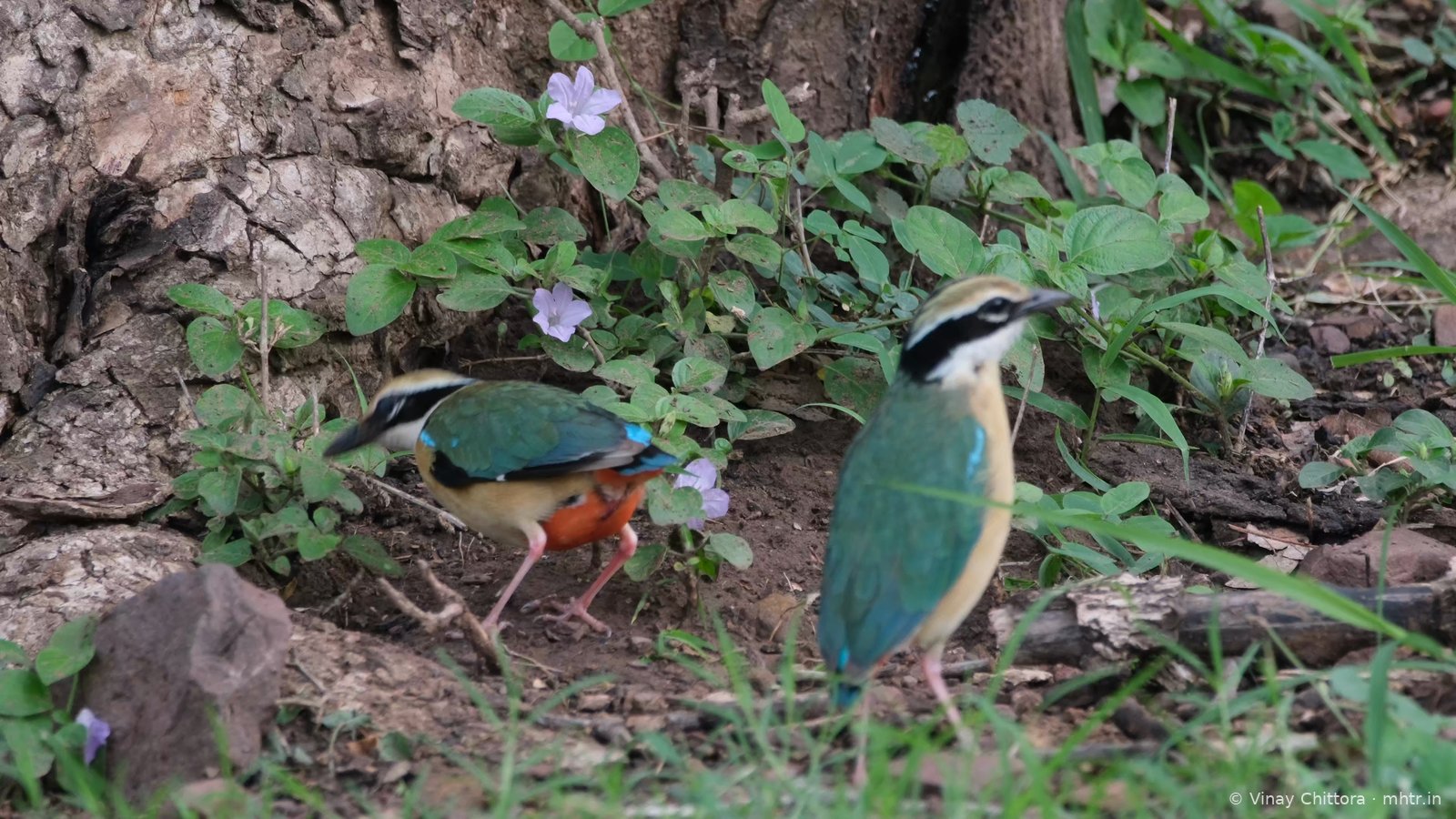
On one of these trees a line of dried sap ran down the trunk and pooled on the ground. On three mornings at the end of June and start of July I watched Indian Pittas crouched on that patch with their feathers spread, the way birds sit when they are anting. There were ants around the flow, but at that distance I could not see them on the birds, so I am not sure whether the pittas were after the sap, the ants, or both. The birds were nesting nearby. I never went near the nest.
What I am not claiming
I am not saying the birds were medicating themselves, or that the heat made them come more often. Nobody has tested this sap, and I didn't keep timed watches. These are notes on what I saw, written down so that someone with the time and the means can look properly.
If you know trees like these in the area, please leave them and their sap alone.